Self Charging Hybrid Cars combine a petrol engine, an electric motor, and a rechargeable battery. Unlike plug-in hybrids, they usually do not require an external charging cable. Their battery gains energy while the vehicle moves, especially during braking and deceleration. This process is called regenerative braking.
The system feels familiar from the driver’s seat. At low speeds, the electric motor may move the car quietly through streets or parking areas. When stronger acceleration is needed, the petrol engine joins in. During a downhill section, the motor can work like a generator, sending recovered energy back to the battery. A control computer decides which power source should operate, often within seconds.
The phrase “self charging” can be slightly misleading. These cars do not create unlimited energy, and they still depend on petrol. The battery remains relatively small, so electric-only driving is usually limited. Real-world efficiency also changes with traffic, weather, tyre pressure, road gradients, and driving habits.
That matters.
Understanding these limits makes the technology easier to judge fairly. A well-maintained hybrid can reduce fuel use in urban driving, where frequent braking provides more recovery opportunities. However, motorway journeys may offer fewer advantages. Battery condition, service history, and manufacturer specifications deserve careful attention before purchase.
This guide explains how energy moves through the vehicle, how the engine and motor share work, and why regenerative braking affects efficiency. It also considers practical ownership details, including maintenance, driving behaviour, and common misunderstandings. The technology is clever, but not magical.
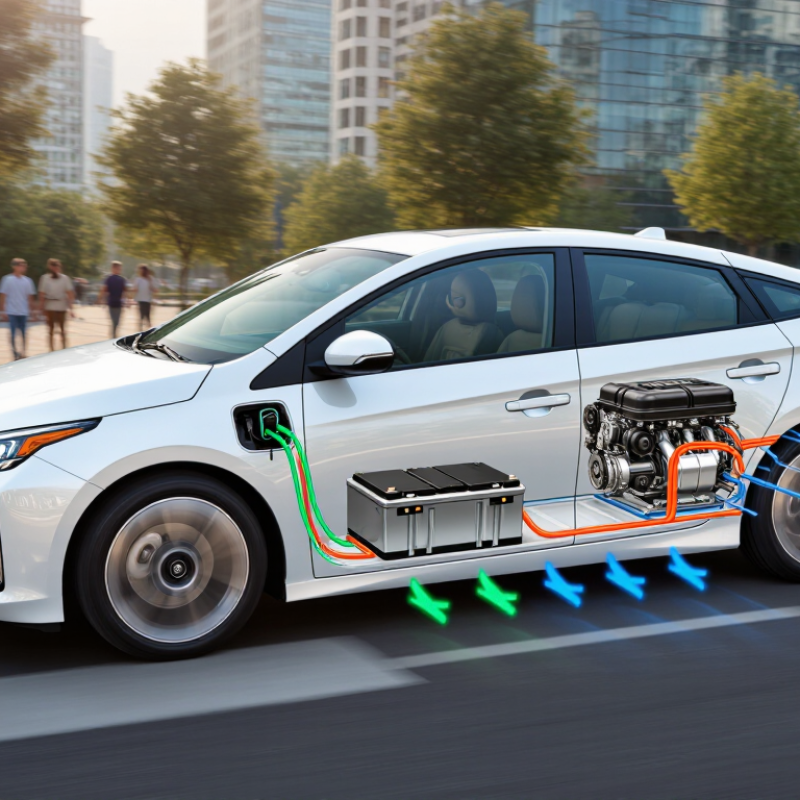
A self-charging hybrid combines an internal-combustion engine, electric motor, battery, inverter, and control unit. The engine supplies steady power during cruising and harder acceleration. The electric motor assists at low speeds, where engines often operate inefficiently. A power-split transmission manages both sources without requiring a plug.
The battery is compact, usually placed beneath the rear seat or cargo floor. It stores electricity from regenerative braking. When the driver slows, the motor changes into a generator and captures part of the car’s kinetic energy.
The U.S. Department of Energy describes this process as recovering energy otherwise lost through brake heat. The inverter then converts electrical flow between the battery and motor. It is a small component with a major responsibility.
Sensors constantly monitor speed, throttle position, battery charge, and temperature. Their software decides when to stop the engine, restart it, or blend electric assistance. In city traffic, frequent braking creates more recovery opportunities. On highways, the engine usually carries more of the load.
The International Energy Agency reported nearly 14 million electric car sales worldwide in 2023, showing how quickly electrified powertrains are expanding.
However, “self-charging” can sound misleading. The battery still receives energy from fuel-powered driving. Regeneration helps, but it cannot create free electricity. Efficiency also depends on weather, traffic, tire pressure, and driving habits. Industry testing gives useful averages, yet real roads remain messier.
How Do Self Charging Hybrid Cars Work?
How the Engine and Electric Motor Share Driving Work
A self-charging hybrid combines a gasoline engine, an electric motor, and a high-voltage battery. The engine burns fuel to create mechanical power. The motor uses stored electrical energy to turn the wheels or support the engine. A control computer constantly balances these sources, based on speed, battery charge, road slope, and accelerator pressure.
At low speeds, the motor may move the car quietly for a short distance. During stronger acceleration, the engine and motor can work together. A power-split transmission manages this handover without requiring a conventional manual gear change. The engine may also drive a generator, which produces electricity for the battery or motor. It is a carefully managed partnership. Still, the transition is not always perfectly smooth.
When the driver lifts off the accelerator or presses the brake, the motor changes role. It becomes a generator and converts some wheel movement into electricity. This process, called regenerative braking, sends energy back to the battery. Friction brakes provide additional stopping power when needed, especially during hard braking. The system cannot recover every bit of lost energy. Cold weather, steep hills, heavy loads, and a full battery can reduce electric assistance. In daily driving, gentle acceleration and early braking usually give the hybrid more opportunities to use its motor efficiently.
Typical operating characteristics of a full self-charging hybrid system. Exact specifications vary by vehicle size, drivetrain design, battery capacity, and driving conditions.
| Driving Situation | Engine Operation | Electric Motor Operation | Energy Flow | Why This Mode Is Used |
|---|---|---|---|---|
| Vehicle Start and Low-Speed Driving | The gasoline engine is usually switched off when the battery has sufficient charge and power demand is modest. | The motor drives the wheels using electricity from the high-voltage battery. | Battery → Inverter → Electric Motor → Wheels | Electric motors provide immediate torque and can move the vehicle efficiently in stop-and-go traffic. |
| Gentle Acceleration | The engine may remain off or start briefly if additional power is required. | The motor supplies most or all of the driving force. | Battery → Motor → Wheels | Using electric power at light loads reduces unnecessary engine operation and fuel consumption. |
| Moderate Acceleration | The engine starts and contributes mechanical power through the transmission or power-split device. | The motor assists the engine with additional torque. | Fuel → Engine + Battery → Motor → Wheels | Sharing the load allows the engine to operate closer to an efficient range while the motor provides extra response. |
| Hard Acceleration or Steep Climbing | The engine operates at a higher output to provide sustained power. | The motor delivers maximum available assistance until battery power or system limits are reached. | Fuel → Engine and Battery → Motor → Wheels | The two power sources work together to meet high power demand without requiring a very large engine. |
| Steady Cruising | The engine usually provides most of the required power and may also generate electricity. | The motor may provide small corrections, assist during changes in speed, or operate as a generator. | Fuel → Engine → Wheels and/or Generator → Battery | At steady speeds, the engine can efficiently supply continuous power while maintaining the battery’s state of charge. |
| Engine Charging the Battery | The engine drives a generator directly or produces excess power through the hybrid powertrain. | The traction motor may stop driving and operate as a generator. | Fuel → Engine → Generator → Battery | The system can replenish battery energy without an external charging cable, although this conversion involves energy losses. |
| Braking and Deceleration | The engine is normally switched off or disconnected from the wheels when possible. | The motor changes into generator mode and resists wheel rotation. | Wheels → Motor-Generator → Battery | Regenerative braking recovers part of the vehicle’s kinetic energy that would otherwise become heat in the brakes. |
| Low Battery State of Charge | The engine runs more often and may operate at an efficient load to generate electricity. | The motor continues to assist when necessary, but electric-only operation is reduced. | Fuel → Engine → Wheels and Battery | Control software protects the battery by keeping its charge within a prescribed operating window. |
| Stopping and Idling | The engine shuts down automatically when conditions allow. | The motor remains ready to restart the vehicle smoothly and silently. | Battery → Auxiliary Systems and Restart Motor | Turning the engine off while stationary avoids fuel use during idle periods. |
| Typical system facts: A self-charging hybrid normally uses a high-voltage battery of roughly 1–3 kWh, an electric motor commonly rated from about 20–100 kW, regenerative braking, and automatic power-control software. It does not need an external charging connection, but it still obtains most of its usable energy from fuel and cannot recover all braking energy. | ||||
In a self-charging hybrid, regenerative braking turns motion into electrical energy. When the driver lifts the accelerator, the motor changes roles. It becomes a generator. The wheels spin it, creating electricity for the high-voltage battery. The engine may recharge the battery, but braking recovery is equally important. It does not create energy.
The U.S. Department of Energy’s Alternative Fuels Data Center describes this process as recovering energy normally lost as brake heat. National Renewable Energy Laboratory technical reviews report practical recovery rates commonly near 60–70%. Results vary with speed, battery charge, temperature, and control software. That figure is not guaranteed. A nearly full battery accepts less energy. Slippery roads also require gentler regeneration. Energy can still disappear as heat. Real driving is less perfect than diagrams suggest.
Tips: Lift early before junctions. Use smooth pedal pressure. Watch the energy-flow display, but do not chase every green bar. Strong regeneration may feel unfamiliar. In dense traffic, it can reduce brake wear, yet tire grip and safe stopping remain more important. DOE guidance confirms that regenerative braking cannot replace normal braking in every situation. After a steep descent, check the battery indicator. If regeneration weakens, friction brakes may work harder. A short test drive reveals more than marketing language.
A self-charging hybrid uses a high-voltage battery as a temporary energy reservoir. It does not need a charging cable. During braking, the electric motor changes into a generator. It captures some kinetic energy that would otherwise become heat in the brake discs. The generator sends this electricity through an inverter and into the battery as direct current. The battery management system monitors temperature, voltage, and charge level every moment. It protects the cells from excessive heat and overcharging.
Small details matter.
When the car moves away from a stop, the battery supplies power to the inverter. The inverter converts it into the changing current needed by the electric motor. The motor then provides quiet acceleration and can reduce the engine’s workload. At higher speeds, the petrol engine may drive the wheels or turn a generator. The control system constantly blends these sources. The battery usually stays within a middle charge range, rather than becoming completely full.
The phrase “self-charging” can sound too simple. In reality, the engine may also produce electricity, and energy losses still occur.
Tips: Use gentle braking early, especially when approaching traffic lights. This gives the regenerative system more time to recover energy. Avoid expecting endless electric driving. Battery performance changes with temperature, road slope, traffic, and age. The dashboard energy display is helpful, but it is not a laboratory measurement. Real-world efficiency may differ from official figures.
A self-charging hybrid depends on a fast, quiet control system. Sensors monitor speed, throttle position, battery charge, engine temperature, and road load. The controller then chooses electric drive, engine power, or both. During braking, the motor changes direction and works as a generator. It sends recovered electricity to the battery instead of wasting all energy as heat.
The battery is never managed casually. Software protects it within a narrow charge range, often avoiding both full charge and deep discharge. That reserve allows repeated regenerative braking in traffic. The U.S. Department of Energy explains that regenerative braking recovers kinetic energy normally lost through friction. ICCT’s 2023 Global Fuel Economy Initiative report measured average new-car fuel consumption at 7.1 L/100 km in 2021. Better control cannot solve every efficiency problem. Cold starts, steep climbs, and high cabin heating still demand engine power.
Tips: Drive smoothly and lift early before junctions. This gives the controller more braking energy to recover. Keep tyres correctly inflated, too. The IEA reports that road transport creates roughly three-quarters of transport-related emissions, so small efficiency gains matter at scale. Still, dashboard energy graphics can oversimplify what happens underneath. A hybrid may display “charging” while losing energy through conversion, resistance, and battery cooling. My practical view is less polished: smooth inputs usually help more than chasing every displayed regeneration bar.
This representative drive-cycle chart shows how a hybrid control system coordinates the engine, electric motor, regenerative braking, and high-voltage battery. The engine-generator supplies power during sustained loads, while regenerative braking recovers kinetic energy during deceleration. Battery state of charge is intentionally maintained within a moderate operating window rather than being charged from an external power source.